

Choice Made Simple!
Too many options?Click below to purchase an online gift card that can be used at participating retailers in Village Green Shopping Centre and continue your shopping IN CENTRE!Purchase HereHome
Reconstructing Rawls by Robert S. Taylor, Paperback | Indigo Chapters
Coles
Loading Inventory...
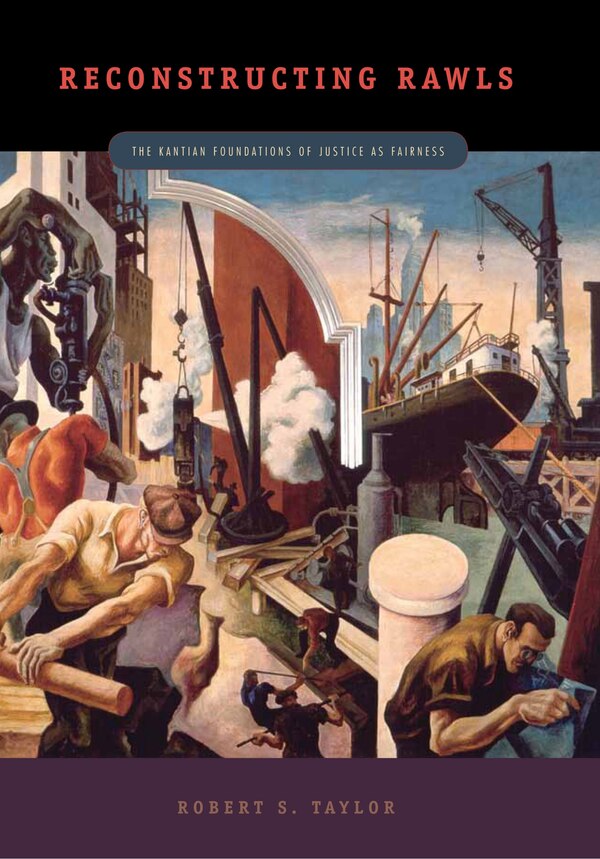
Reconstructing Rawls by Robert S. Taylor, Paperback | Indigo Chapters in Vernon, BC
By Robert S. Taylor
Current price: $64.95
Coles
Reconstructing Rawls by Robert S. Taylor, Paperback | Indigo Chapters in Vernon, BC
By Robert S. Taylor
Current price: $64.95
Loading Inventory...
Size: 1 x 9 x 1
*Product information may vary - to confirm product availability, pricing, shipping and return information please contact Coles
Reconstructing Rawls has one overarching goal: to reclaim Rawls for the Enlightenment—more specifically, the Prussian Enlightenment. Rawls’s so-called political turn in the 1980s, motivated by a newfound interest in pluralism and the accommodation of difference, has been unhealthy for autonomy-based liberalism and has led liberalism more broadly toward cultural relativism, be it in the guise of liberal multiculturalism or critiques of cosmopolitan distributive-justice theories. Robert Taylor believes that it is time to redeem A Theory of Justice’s implicit promise of a universalistic, comprehensive Kantian liberalism. Reconstructing Rawls on Kantian foundations leads to some unorthodox conclusions about justice as fairness, to be sure: for example, it yields a more civic-humanist reading of the priority of political liberty, a more Marxist reading of the priority of fair equality of opportunity, and a more ascetic or antimaterialist reading of the difference principle. It nonetheless leaves us with a theory that is still recognizably Rawlsian and reveals a previously untraveled road out of Theory—a road very different from the one Rawls himself ultimately followed. | Reconstructing Rawls by Robert S. Taylor, Paperback | Indigo Chapters
Reconstructing Rawls has one overarching goal: to reclaim Rawls for the Enlightenment—more specifically, the Prussian Enlightenment. Rawls’s so-called political turn in the 1980s, motivated by a newfound interest in pluralism and the accommodation of difference, has been unhealthy for autonomy-based liberalism and has led liberalism more broadly toward cultural relativism, be it in the guise of liberal multiculturalism or critiques of cosmopolitan distributive-justice theories. Robert Taylor believes that it is time to redeem A Theory of Justice’s implicit promise of a universalistic, comprehensive Kantian liberalism. Reconstructing Rawls on Kantian foundations leads to some unorthodox conclusions about justice as fairness, to be sure: for example, it yields a more civic-humanist reading of the priority of political liberty, a more Marxist reading of the priority of fair equality of opportunity, and a more ascetic or antimaterialist reading of the difference principle. It nonetheless leaves us with a theory that is still recognizably Rawlsian and reveals a previously untraveled road out of Theory—a road very different from the one Rawls himself ultimately followed. | Reconstructing Rawls by Robert S. Taylor, Paperback | Indigo Chapters
You May Also Like










More About Coles at Village Green Shopping Centre
Find everything in-store including new, used and children’s books, music, movies, games and toys. Visit Coles today to find the perfect gift, or a novel for yourself. COVID-19 UPDATE: Open | Regular Centre Hours
Store Info
Find Coles at Village Green Shopping Centre in Vernon, BC
Visit Coles at Village Green Shopping Centre in Vernon, BC