

Choice Made Simple!
Too many options?Click below to purchase an online gift card that can be used at participating retailers in Village Green Shopping Centre and continue your shopping IN CENTRE!Purchase HereHome
Orderly Change by David M. Andrews, Paper over Board | Indigo Chapters
Coles
Loading Inventory...
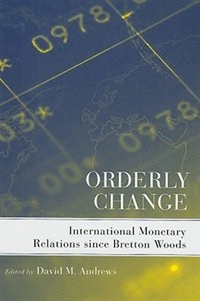
Orderly Change by David M. Andrews, Paper over Board | Indigo Chapters in Vernon, BC
From David M. Andrews
Current price: $103.95
Coles
Orderly Change by David M. Andrews, Paper over Board | Indigo Chapters in Vernon, BC
From David M. Andrews
Current price: $103.95
Loading Inventory...
Size: 2.235 x 23.5 x 539
*Product information may vary - to confirm product availability, pricing, shipping and return information please contact Coles
The Bretton Woods Conference of 1944 resulted in the formation of the International Monetary Fund and World Bank and helped lay the foundation for an unprecedented expansion of international commerce. Yet six decades later, at the beginning of the twenty-first century, the central characteristics of the Bretton Woods system remain disputed?and the subject of continuing public policy debate. Relying on extensive access to IMF, World Bank, and other archives, the contributors to Orderly Change show that the history of international monetary relations since Bretton Woods is one of orderly change?that is, change within a sturdy but supple framework. Even during the years of fixed exchange rates, very different practices characterized international monetary relations immediately after World War II, during the 1950s, and during the 1960s. Later, when the fixed exchange-rate system collapsed, underlying commitments to trade liberalization in the context of continuing national economic policy autonomy survived and even flourished. However, the resulting international economic order is now in grave danger: the tension between states' autonomy and their mutual openness has become acute, as international monetary structures no longer appear capable of mediating between these objectives. David M. Andrews and the contributors to Orderly Change examine past transitions as a means of suggesting possible avenues for current and future policymaking. Contributors: David M. Andrews, Scripps College; Jeffrey M. Chwieroth, London School of Economics; Lucia Coppolaro, Universitat Pompeu Fabrae; E. Richard Gold, McGill University; Eric Helleiner, University of Waterloo; Louis W. Pauly, University of Toronto; Wesley W. Widmaier, St. Joseph's University; Anastasia Xenias, Hunter College, City University of New York; Hubert Zimmermann, Cornell University | Orderly Change by David M. Andrews, Paper over Board | Indigo Chapters
The Bretton Woods Conference of 1944 resulted in the formation of the International Monetary Fund and World Bank and helped lay the foundation for an unprecedented expansion of international commerce. Yet six decades later, at the beginning of the twenty-first century, the central characteristics of the Bretton Woods system remain disputed?and the subject of continuing public policy debate. Relying on extensive access to IMF, World Bank, and other archives, the contributors to Orderly Change show that the history of international monetary relations since Bretton Woods is one of orderly change?that is, change within a sturdy but supple framework. Even during the years of fixed exchange rates, very different practices characterized international monetary relations immediately after World War II, during the 1950s, and during the 1960s. Later, when the fixed exchange-rate system collapsed, underlying commitments to trade liberalization in the context of continuing national economic policy autonomy survived and even flourished. However, the resulting international economic order is now in grave danger: the tension between states' autonomy and their mutual openness has become acute, as international monetary structures no longer appear capable of mediating between these objectives. David M. Andrews and the contributors to Orderly Change examine past transitions as a means of suggesting possible avenues for current and future policymaking. Contributors: David M. Andrews, Scripps College; Jeffrey M. Chwieroth, London School of Economics; Lucia Coppolaro, Universitat Pompeu Fabrae; E. Richard Gold, McGill University; Eric Helleiner, University of Waterloo; Louis W. Pauly, University of Toronto; Wesley W. Widmaier, St. Joseph's University; Anastasia Xenias, Hunter College, City University of New York; Hubert Zimmermann, Cornell University | Orderly Change by David M. Andrews, Paper over Board | Indigo Chapters
You May Also Like









More About Coles at Village Green Shopping Centre
Find everything in-store including new, used and children’s books, music, movies, games and toys. Visit Coles today to find the perfect gift, or a novel for yourself. COVID-19 UPDATE: Open | Regular Centre Hours
Store Info
Find Coles at Village Green Shopping Centre in Vernon, BC
Visit Coles at Village Green Shopping Centre in Vernon, BC