

Choice Made Simple!
Too many options?Click below to purchase an online gift card that can be used at participating retailers in Village Green Shopping Centre and continue your shopping IN CENTRE!Purchase HereHome
Three-Dimensional X-Ray Diffraction Microscopy: Mapping Polycrystals and their Dynamics
Coles
Loading Inventory...
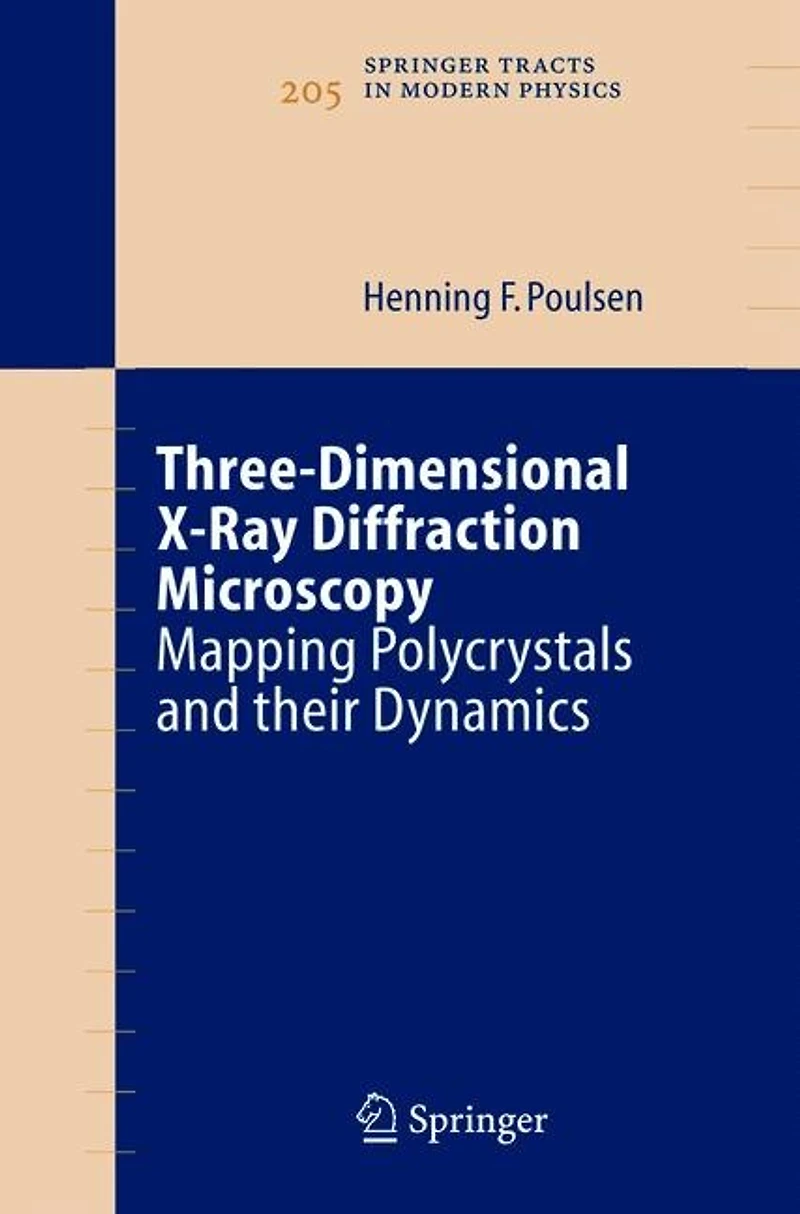
Three-Dimensional X-Ray Diffraction Microscopy: Mapping Polycrystals and their Dynamics in Vernon, BC
Current price: $321.50
Coles
Three-Dimensional X-Ray Diffraction Microscopy: Mapping Polycrystals and their Dynamics in Vernon, BC
Current price: $321.50
Loading Inventory...
Size: Hardcover
*Product information may vary - to confirm product availability, pricing, shipping and return information please contact Coles
Three-dimensional x-ray diffraction (3DXRD) microscopy is a novel experimental method for structural characterisation of polycrystalline materials. The position, morphology, phase, strain and crystallographic orientation of hundreds of grains or sub-grain embedded within mm-cm thick specimens can be determined simultaneously. Furthermore, the dynamics of the individual structural elements can be monitored during typical processes such as deformation or annealing. The book gives a comprehensive account of the methodology followed by a summary of selected applications. The method is presented from a mathematical/crystallographic point-of-view but with sufficient hands-on details to enable the reader to plan his or her own experiments. The scope of applications includes work in materials science and engineering, geophysics, geology, chemistry and pharmaceutical science.
Three-dimensional x-ray diffraction (3DXRD) microscopy is a novel experimental method for structural characterisation of polycrystalline materials. The position, morphology, phase, strain and crystallographic orientation of hundreds of grains or sub-grain embedded within mm-cm thick specimens can be determined simultaneously. Furthermore, the dynamics of the individual structural elements can be monitored during typical processes such as deformation or annealing. The book gives a comprehensive account of the methodology followed by a summary of selected applications. The method is presented from a mathematical/crystallographic point-of-view but with sufficient hands-on details to enable the reader to plan his or her own experiments. The scope of applications includes work in materials science and engineering, geophysics, geology, chemistry and pharmaceutical science.
You May Also Like











More About Coles at Village Green Shopping Centre
Find everything in-store including new, used and children’s books, music, movies, games and toys. Visit Coles today to find the perfect gift, or a novel for yourself. COVID-19 UPDATE: Open | Regular Centre Hours
Store Info
Find Coles at Village Green Shopping Centre in Vernon, BC
Visit Coles at Village Green Shopping Centre in Vernon, BC