

Choice Made Simple!
Too many options?Click below to purchase an online gift card that can be used at participating retailers in Village Green Shopping Centre and continue your shopping IN CENTRE!Purchase HereHome
The Translation Chapter of the Late Ming Lulongsai Lüe: Bilingual Sections of a Chinese Military Collection
Coles
Loading Inventory...
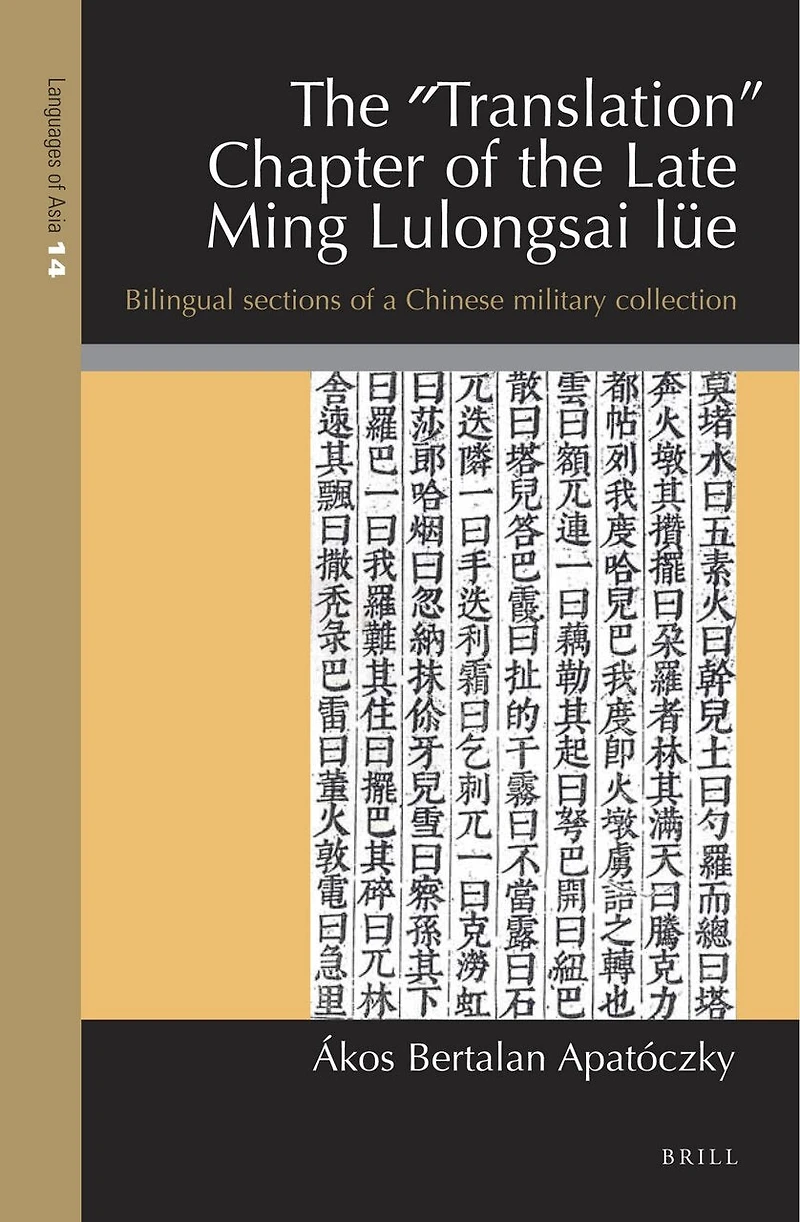
The Translation Chapter of the Late Ming Lulongsai Lüe: Bilingual Sections of a Chinese Military Collection in Vernon, BC
Current price: $254.99
Coles
The Translation Chapter of the Late Ming Lulongsai Lüe: Bilingual Sections of a Chinese Military Collection in Vernon, BC
Current price: $254.99
Loading Inventory...
Size: Hardcover
*Product information may vary - to confirm product availability, pricing, shipping and return information please contact Coles
In this book, Ákos Bertalan Apatóczky offers a complete reconstruction of the Chinese-Mongol vocabulary of the 17th century comprehensive Chinese military work called Lulongsai lüe (盧龍塞略, LLSL), a document of key importance containing one of the last Sino-Mongol glossaries without proper critical reconstruction until now. The work has resulted in a clarification of the earlier sources the compilers of LLSL used in the bilingual part. The author argues that contrary to what scholars have thought of it until now, the linguistic corpus of the glossary is not homogeneous and does not represent a single linguistic status; it does, however, shed some light on chronological and philological questions concerning the earlier works incorporated in it.
In this book, Ákos Bertalan Apatóczky offers a complete reconstruction of the Chinese-Mongol vocabulary of the 17th century comprehensive Chinese military work called Lulongsai lüe (盧龍塞略, LLSL), a document of key importance containing one of the last Sino-Mongol glossaries without proper critical reconstruction until now. The work has resulted in a clarification of the earlier sources the compilers of LLSL used in the bilingual part. The author argues that contrary to what scholars have thought of it until now, the linguistic corpus of the glossary is not homogeneous and does not represent a single linguistic status; it does, however, shed some light on chronological and philological questions concerning the earlier works incorporated in it.
You May Also Like







More About Coles at Village Green Shopping Centre
Find everything in-store including new, used and children’s books, music, movies, games and toys. Visit Coles today to find the perfect gift, or a novel for yourself. COVID-19 UPDATE: Open | Regular Centre Hours
Store Info
Find Coles at Village Green Shopping Centre in Vernon, BC
Visit Coles at Village Green Shopping Centre in Vernon, BC