

Choice Made Simple!
Too many options?Click below to purchase an online gift card that can be used at participating retailers in Village Green Shopping Centre and continue your shopping IN CENTRE!Purchase HereHome
Symmetry, Shared Labels and Movement in Syntax
Coles
Loading Inventory...
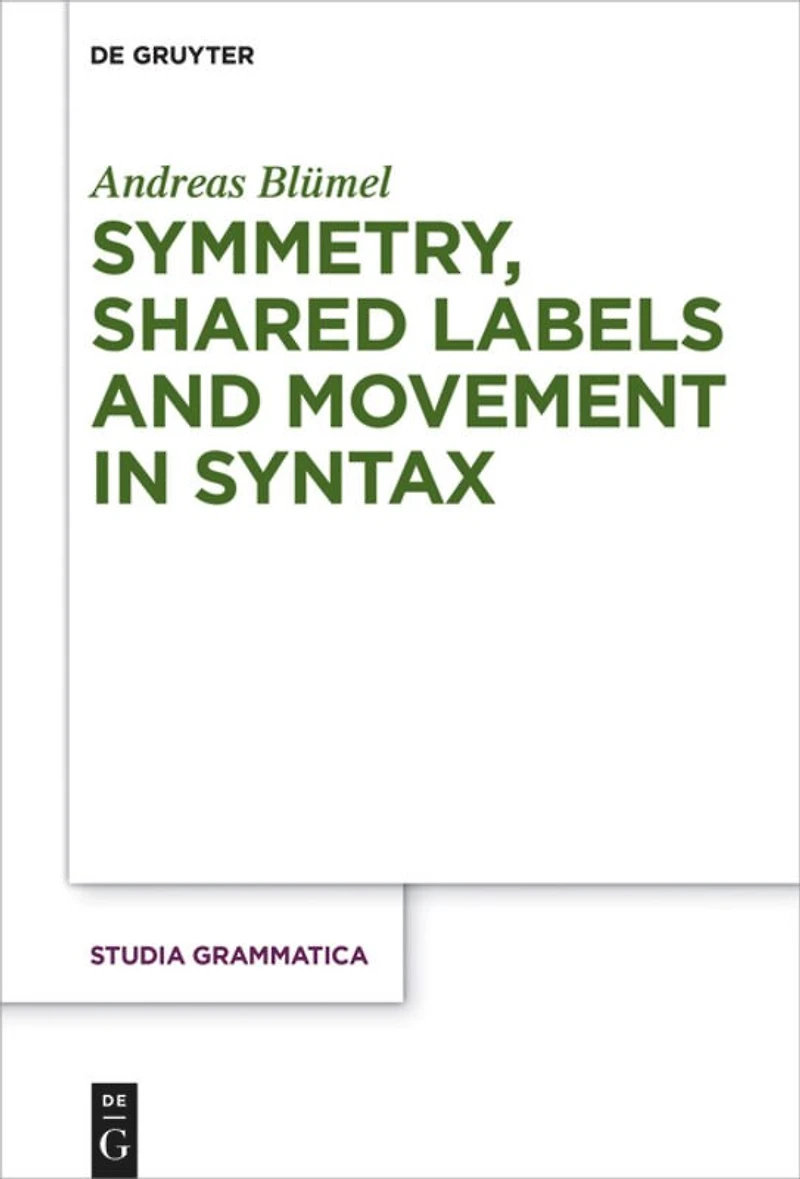
Symmetry, Shared Labels and Movement in Syntax in Vernon, BC
Current price: $177.99
Coles
Symmetry, Shared Labels and Movement in Syntax in Vernon, BC
Current price: $177.99
Loading Inventory...
Size: Hardcover
*Product information may vary - to confirm product availability, pricing, shipping and return information please contact Coles
What is the trigger for displacement phenomena in natural language syntax? And how can constraints on syntactic movement be derived from interface conditions and so-called Third Factor principles? Within the Minimalist Program a standard answer to the first question is that it is driven by morphosyntactic features. This monograph challenges that view and suggests that the role of features in driving syntactic computation has been overestimated. Instead it proposes that "labeling" -- the detection of a prominent element in sets formed by Merge -- plays a role in driving transformations, and labeling itself is understood to derive from an interplay of efficient computation and the need for a label at the Conceptual-Intentional systems. It explores this idea in four empirical domains: Long-distance dependencies, Criterial Freezing-phenomena, nested dependencies and ATB-movement. The languages considered include English, German and Hebrew.
What is the trigger for displacement phenomena in natural language syntax? And how can constraints on syntactic movement be derived from interface conditions and so-called Third Factor principles? Within the Minimalist Program a standard answer to the first question is that it is driven by morphosyntactic features. This monograph challenges that view and suggests that the role of features in driving syntactic computation has been overestimated. Instead it proposes that "labeling" -- the detection of a prominent element in sets formed by Merge -- plays a role in driving transformations, and labeling itself is understood to derive from an interplay of efficient computation and the need for a label at the Conceptual-Intentional systems. It explores this idea in four empirical domains: Long-distance dependencies, Criterial Freezing-phenomena, nested dependencies and ATB-movement. The languages considered include English, German and Hebrew.
You May Also Like














More About Coles at Village Green Shopping Centre
Find everything in-store including new, used and children’s books, music, movies, games and toys. Visit Coles today to find the perfect gift, or a novel for yourself. COVID-19 UPDATE: Open | Regular Centre Hours
Store Info
Find Coles at Village Green Shopping Centre in Vernon, BC
Visit Coles at Village Green Shopping Centre in Vernon, BC