

Choice Made Simple!
Too many options?Click below to purchase an online gift card that can be used at participating retailers in Village Green Shopping Centre and continue your shopping IN CENTRE!Purchase HereHome
Pentadic Redaction in the Manichaean Kephalaia
Coles
Loading Inventory...
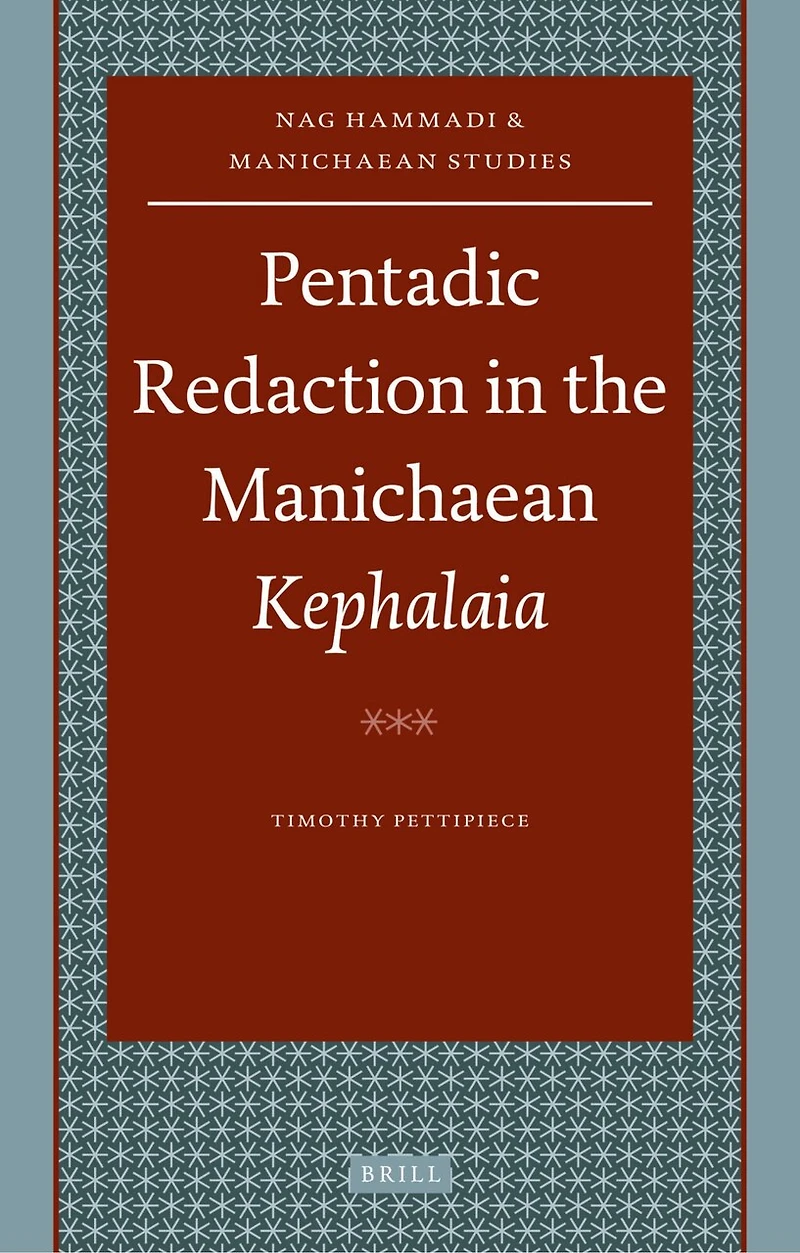
Pentadic Redaction in the Manichaean Kephalaia in Vernon, BC
By None
Current price: $240.99
Coles
Pentadic Redaction in the Manichaean Kephalaia in Vernon, BC
By None
Current price: $240.99
Loading Inventory...
Size: Hardcover
*Product information may vary - to confirm product availability, pricing, shipping and return information please contact Coles
Discovered in 1929, the Manichaean Kephalaia have opened up an important window on the early development of Manichaean doctrine. This study identifies a significant redactional tendency whereby the compilers of the text sought to clarify ambiguities in “canonical” Manichaean tradition by means of five-part numerical series. This discovery challenges the conventional wisdom of Manichaean scholarship, which has long maintained that, since Mani recorded his own teachings in a series of what later became canonical writings, Manichaean doctrines were transmitted relatively unchanged from the master to successive generations of disciples. Since this assumption is now called into question, it now becomes necessary to re-evaluate received notions about the shape of both the Manichaean “canon” and “tradition.”
Discovered in 1929, the Manichaean Kephalaia have opened up an important window on the early development of Manichaean doctrine. This study identifies a significant redactional tendency whereby the compilers of the text sought to clarify ambiguities in “canonical” Manichaean tradition by means of five-part numerical series. This discovery challenges the conventional wisdom of Manichaean scholarship, which has long maintained that, since Mani recorded his own teachings in a series of what later became canonical writings, Manichaean doctrines were transmitted relatively unchanged from the master to successive generations of disciples. Since this assumption is now called into question, it now becomes necessary to re-evaluate received notions about the shape of both the Manichaean “canon” and “tradition.”
You May Also Like








More About Coles at Village Green Shopping Centre
Find everything in-store including new, used and children’s books, music, movies, games and toys. Visit Coles today to find the perfect gift, or a novel for yourself. COVID-19 UPDATE: Open | Regular Centre Hours
Store Info
Find Coles at Village Green Shopping Centre in Vernon, BC
Visit Coles at Village Green Shopping Centre in Vernon, BC