

Choice Made Simple!
Too many options?Click below to purchase an online gift card that can be used at participating retailers in Village Green Shopping Centre and continue your shopping IN CENTRE!Purchase HereHome
Entrepreneurial Teams: An Input-Process-Outcome framework
Coles
Loading Inventory...
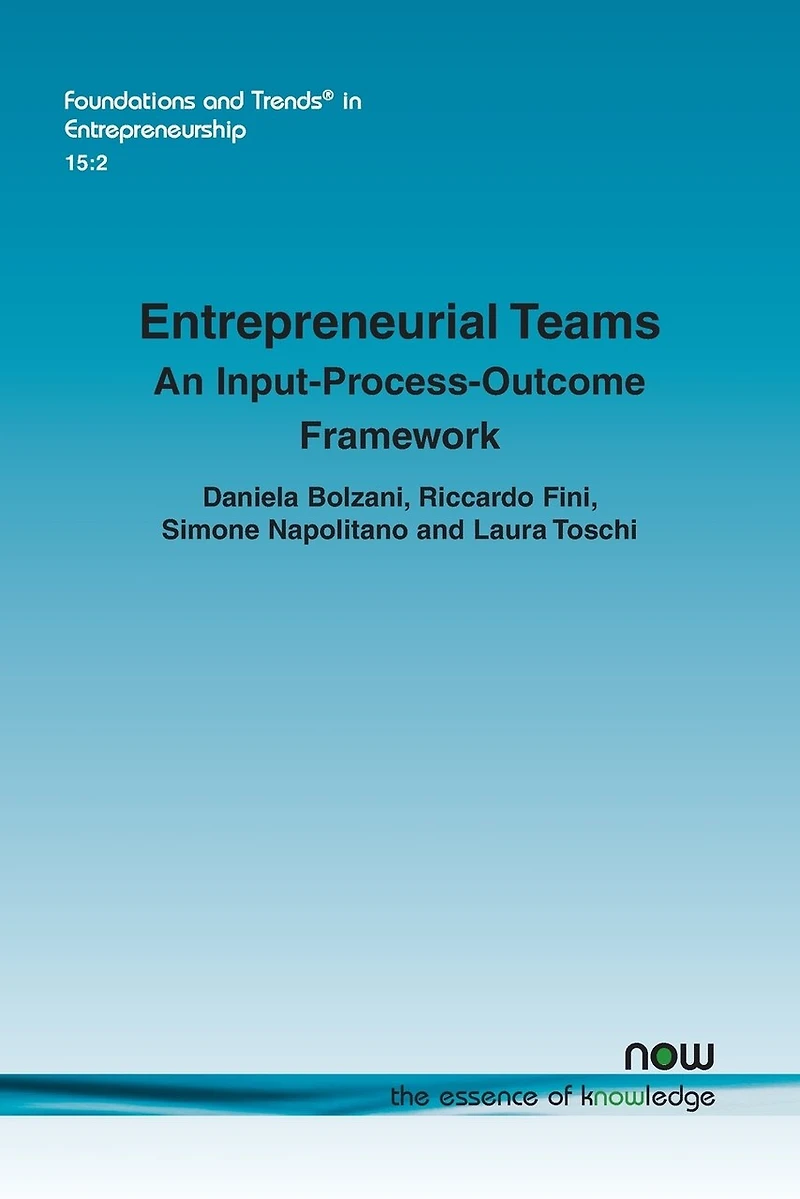
Entrepreneurial Teams: An Input-Process-Outcome framework in Vernon, BC
Current price: $128.95
Coles
Entrepreneurial Teams: An Input-Process-Outcome framework in Vernon, BC
Current price: $128.95
Loading Inventory...
Size: Paperback
*Product information may vary - to confirm product availability, pricing, shipping and return information please contact Coles
Scholarly research investigating the venturing processes by entrepreneurial teams (ETs) is relatively recent and characterized by specific and limited areas of attention. Although the authors build on earlier contributions, Entrepreneurial Teams: An Input-Process-Outcome Framework takes a nuanced view of the phenomenon. First it offers a comprehensive understanding of the construct 'entrepreneurial team' by focusing on its definition and characteristics. Second, it depicts team evolution phases, from inception to maturity, linking these to firm performance by using a process approach (i.e., Input-Process-Outcome). Entrepreneurial Teams: An Input-Process-Outcome Framework is structured as follows. First, it outlines the methodology used to search the relevant literature on the topic and to create meaningful thematic clusters. Second, it presents the previous reviews on ETs and illustrate how this monograph can be differentiated from these. Third, it focuses on the ambiguity of the definition of ETs in previous research, providing its own definition of ETs and identifying areas for future development. Fourth, it presents an in-depth analysis of the 14 thematic clusters identified according to the Input-Process-Outcome framework. In each cluster, the authors review the state of the art on the topic, highlighting limitations and shortcomings. For 'inputs, ' they review papers dealing with individual/team characteristics and ET formation. For 'processes, ' they review papers dealing with development and turnover in ETs, ETs and cognition, interactions in ETs, ETs and networks, and, finally, ETs and governance/organization, strategies, and opportunity identification. For 'outcomes, ' they review papers dealing with ETs and new firm creation, legitimacy, fundraising, public support, internationalization, and performance. It concludes by identifying opportunities for further research and offers some suggestions on how to contribute to the state of the art of literature.
Scholarly research investigating the venturing processes by entrepreneurial teams (ETs) is relatively recent and characterized by specific and limited areas of attention. Although the authors build on earlier contributions, Entrepreneurial Teams: An Input-Process-Outcome Framework takes a nuanced view of the phenomenon. First it offers a comprehensive understanding of the construct 'entrepreneurial team' by focusing on its definition and characteristics. Second, it depicts team evolution phases, from inception to maturity, linking these to firm performance by using a process approach (i.e., Input-Process-Outcome). Entrepreneurial Teams: An Input-Process-Outcome Framework is structured as follows. First, it outlines the methodology used to search the relevant literature on the topic and to create meaningful thematic clusters. Second, it presents the previous reviews on ETs and illustrate how this monograph can be differentiated from these. Third, it focuses on the ambiguity of the definition of ETs in previous research, providing its own definition of ETs and identifying areas for future development. Fourth, it presents an in-depth analysis of the 14 thematic clusters identified according to the Input-Process-Outcome framework. In each cluster, the authors review the state of the art on the topic, highlighting limitations and shortcomings. For 'inputs, ' they review papers dealing with individual/team characteristics and ET formation. For 'processes, ' they review papers dealing with development and turnover in ETs, ETs and cognition, interactions in ETs, ETs and networks, and, finally, ETs and governance/organization, strategies, and opportunity identification. For 'outcomes, ' they review papers dealing with ETs and new firm creation, legitimacy, fundraising, public support, internationalization, and performance. It concludes by identifying opportunities for further research and offers some suggestions on how to contribute to the state of the art of literature.
You May Also Like









More About Coles at Village Green Shopping Centre
Find everything in-store including new, used and children’s books, music, movies, games and toys. Visit Coles today to find the perfect gift, or a novel for yourself. COVID-19 UPDATE: Open | Regular Centre Hours
Store Info
Find Coles at Village Green Shopping Centre in Vernon, BC
Visit Coles at Village Green Shopping Centre in Vernon, BC