

Choice Made Simple!
Too many options?Click below to purchase an online gift card that can be used at participating retailers in Village Green Shopping Centre and continue your shopping IN CENTRE!Purchase HereHome
Bridging Silos by Katrina Smith Korfmacher, Paperback | Indigo Chapters
Coles
Loading Inventory...
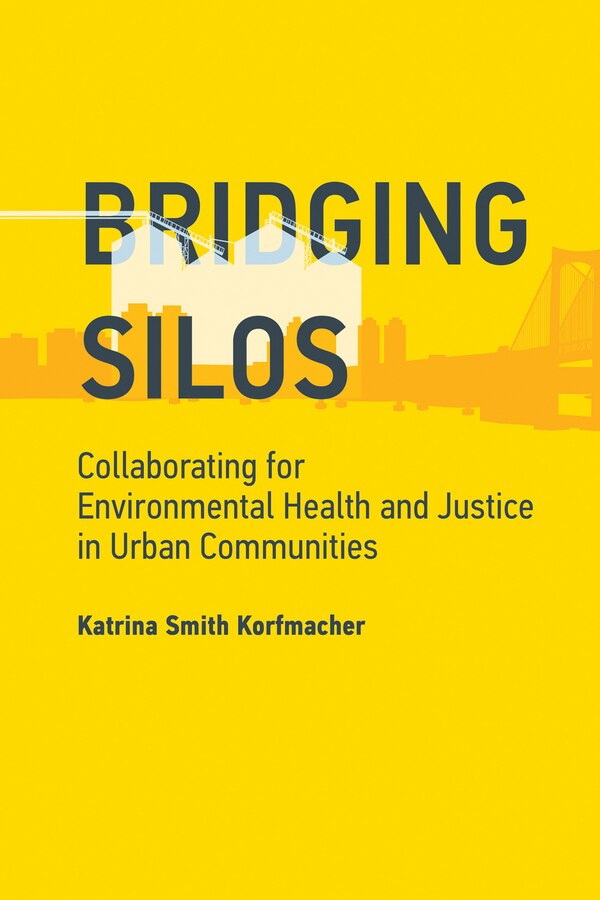
Bridging Silos by Katrina Smith Korfmacher, Paperback | Indigo Chapters in Vernon, BC
By Katrina Smith Korfmacher
Current price: $54.00
Coles
Bridging Silos by Katrina Smith Korfmacher, Paperback | Indigo Chapters in Vernon, BC
By Katrina Smith Korfmacher
Current price: $54.00
Loading Inventory...
Size: 0.87 x 9.06 x 1.3125
*Product information may vary - to confirm product availability, pricing, shipping and return information please contact Coles
How communities can collaborate across systems and sectors to address environmental health disparities; with case studies from Rochester, New York; Duluth, Minnesota; and Southern California. Low-income and marginalized urban communities often suffer disproportionate exposure to environmental hazards, leaving residents vulnerable to associated health problems. Community groups, academics, environmental justice advocates, government agencies, and others have worked to address these issues, building coalitions at the local level to change the policies and systems that create environmental health inequities. In Bridging Silos, Katrina Smith Korfmacher examines ways that communities can collaborate across systems and sectors to address environmental health disparities, with in-depth studies of three efforts to address long-standing environmental health issues: childhood lead poisoning in Rochester, New York; unhealthy built environments in Duluth, Minnesota; and pollution related to commercial ports and international trade in Southern California. All three efforts were locally initiated, driven by local stakeholders, and each addressed issues long known to the community by reframing an old problem in a new way. These local efforts leveraged resources to impact community change by focusing on inequities in environmental health, bringing diverse kinds of knowledge to bear, and forging new connections among existing community, academic, and government groups. Korfmacher explains how the once integrated environmental and public health management systems had become separated into self-contained silos, and compares current efforts to bridge these separations to the development of ecosystem management in the 1990s. Community groups, government agencies, academic institutions, and private institutions each have a role to play, but collaborating effectively requires stakeholders to appreciate their partners' diverse incentives, capacities, and constraints. | Bridging Silos by Katrina Smith Korfmacher, Paperback | Indigo Chapters
How communities can collaborate across systems and sectors to address environmental health disparities; with case studies from Rochester, New York; Duluth, Minnesota; and Southern California. Low-income and marginalized urban communities often suffer disproportionate exposure to environmental hazards, leaving residents vulnerable to associated health problems. Community groups, academics, environmental justice advocates, government agencies, and others have worked to address these issues, building coalitions at the local level to change the policies and systems that create environmental health inequities. In Bridging Silos, Katrina Smith Korfmacher examines ways that communities can collaborate across systems and sectors to address environmental health disparities, with in-depth studies of three efforts to address long-standing environmental health issues: childhood lead poisoning in Rochester, New York; unhealthy built environments in Duluth, Minnesota; and pollution related to commercial ports and international trade in Southern California. All three efforts were locally initiated, driven by local stakeholders, and each addressed issues long known to the community by reframing an old problem in a new way. These local efforts leveraged resources to impact community change by focusing on inequities in environmental health, bringing diverse kinds of knowledge to bear, and forging new connections among existing community, academic, and government groups. Korfmacher explains how the once integrated environmental and public health management systems had become separated into self-contained silos, and compares current efforts to bridge these separations to the development of ecosystem management in the 1990s. Community groups, government agencies, academic institutions, and private institutions each have a role to play, but collaborating effectively requires stakeholders to appreciate their partners' diverse incentives, capacities, and constraints. | Bridging Silos by Katrina Smith Korfmacher, Paperback | Indigo Chapters
You May Also Like
















More About Coles at Village Green Shopping Centre
Find everything in-store including new, used and children’s books, music, movies, games and toys. Visit Coles today to find the perfect gift, or a novel for yourself. COVID-19 UPDATE: Open | Regular Centre Hours
Store Info
Find Coles at Village Green Shopping Centre in Vernon, BC
Visit Coles at Village Green Shopping Centre in Vernon, BC