

Choice Made Simple!
Too many options?Click below to purchase an online gift card that can be used at participating retailers in Village Green Shopping Centre and continue your shopping IN CENTRE!Purchase HereHome
Anyuan by Elizabeth Perry, Paperback | Indigo Chapters
Coles
Loading Inventory...
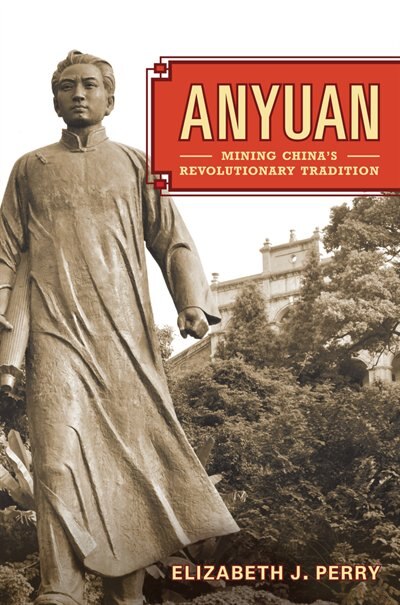
Anyuan by Elizabeth Perry, Paperback | Indigo Chapters in Vernon, BC
By Elizabeth Perry
Current price: $47.03
Coles
Anyuan by Elizabeth Perry, Paperback | Indigo Chapters in Vernon, BC
By Elizabeth Perry
Current price: $47.03
Loading Inventory...
Size: 1.2 x 9 x 1.2
*Product information may vary - to confirm product availability, pricing, shipping and return information please contact Coles
How do we explain the surprising trajectory of the Chinese Communist revolution? Why has it taken such a different route from its Russian prototype? An answer, Elizabeth Perry suggests, lies in the Chinese Communists' creative development and deployment of cultural resources - during their revolutionary rise to power and afterwards. Skillful cultural positioning and cultural patronage, on the part of Mao Zedong, his comrades and successors, helped to construct a polity in which a once alien Communist system came to be accepted as familiarly Chinese. Perry traces this process through a case study of the Anyuan coal mine, a place where Mao and other early leaders of the Chinese Communist Party mobilized an influential labor movement at the beginning of their revolution, and whose history later became a touchstone of political correctness in the People's Republic of China. Once known as China's Little Moscow, Anyuan came over time to symbolize a distinctively Chinese revolutionary tradition. Yet the meanings of that tradition remain highly contested, as contemporary Chinese debate their revolutionary past in search of a new political future. | Anyuan by Elizabeth Perry, Paperback | Indigo Chapters
How do we explain the surprising trajectory of the Chinese Communist revolution? Why has it taken such a different route from its Russian prototype? An answer, Elizabeth Perry suggests, lies in the Chinese Communists' creative development and deployment of cultural resources - during their revolutionary rise to power and afterwards. Skillful cultural positioning and cultural patronage, on the part of Mao Zedong, his comrades and successors, helped to construct a polity in which a once alien Communist system came to be accepted as familiarly Chinese. Perry traces this process through a case study of the Anyuan coal mine, a place where Mao and other early leaders of the Chinese Communist Party mobilized an influential labor movement at the beginning of their revolution, and whose history later became a touchstone of political correctness in the People's Republic of China. Once known as China's Little Moscow, Anyuan came over time to symbolize a distinctively Chinese revolutionary tradition. Yet the meanings of that tradition remain highly contested, as contemporary Chinese debate their revolutionary past in search of a new political future. | Anyuan by Elizabeth Perry, Paperback | Indigo Chapters
You May Also Like








More About Coles at Village Green Shopping Centre
Find everything in-store including new, used and children’s books, music, movies, games and toys. Visit Coles today to find the perfect gift, or a novel for yourself. COVID-19 UPDATE: Open | Regular Centre Hours
Store Info
Find Coles at Village Green Shopping Centre in Vernon, BC
Visit Coles at Village Green Shopping Centre in Vernon, BC