

Choice Made Simple!
Too many options?Click below to purchase an online gift card that can be used at participating retailers in Village Green Shopping Centre and continue your shopping IN CENTRE!Purchase HereHome
Anthology of Early Keyboard Methods
Coles
Loading Inventory...
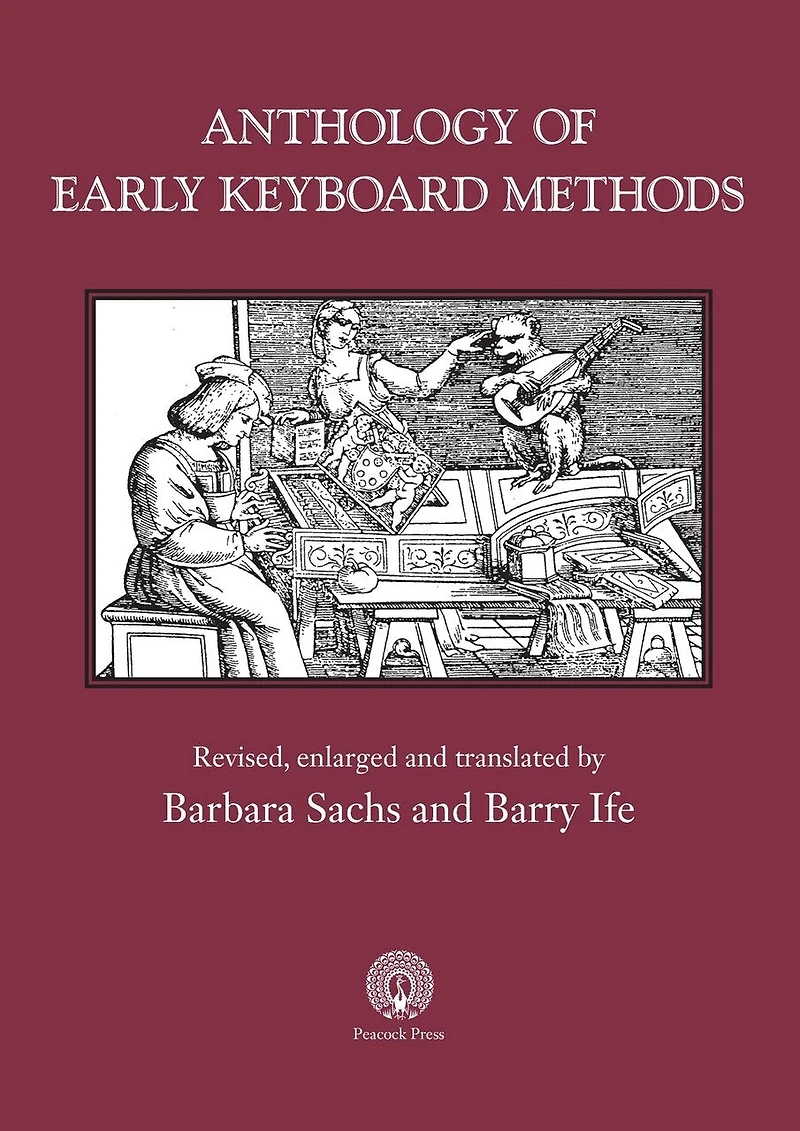
Anthology of Early Keyboard Methods in Vernon, BC
Current price: $49.00
Coles
Anthology of Early Keyboard Methods in Vernon, BC
Current price: $49.00
Loading Inventory...
Size: Paperback
*Product information may vary - to confirm product availability, pricing, shipping and return information please contact Coles
Now that many sources are accessible in facsimile and online, players can see the virtues and drawbacks of manuscripts and original prints, and discover their discrepancies and errors. Verbal instructions also require the utmost attention, because what we may expect an author to say might not be what he laboured to impart. I hope our translations and editorial conclusions credit our authors with having said very meaningful things.Typesetting music with movable characters was notoriously error-prone, misaligned, bulky and often simplified. The composing sticks, holding single rows of characters, were emptied after prints of each page were produced. A 'reprint' required every line to be reassembled: some errors were corrected while new ones were made. Despite its limitations, typesetting remained common long after Merulo (1598) and Frescobaldi (1615) issued beautiful copper-plate engravings of their toccatas, resembling fair manuscripts. Easier to read, correctable, and stored for reuse, they give clues to articulation, accentuation, fingering and phrasing through beaming, spacing, grouping or alignment. Embellishments were written out in more differentiated note values, and short ties could show subtle syncopations, joining notes too brief to be replayed but too close together to have a segmented tie (at least two little curves) inserted between them.Therefore our authors rely on verbal descriptions for their more nuanced ideas, many of which cannot be illustrated. Even examples in single voices, out of their polyphonic context, beg musical questions of rhythm, accentuation, tempo, ficta and mode.It was an unexpected boon to discover, in Arezzo, unreported integral prints of Diruta's Transilvano that support better readings than the compact editions of 1597, 1622 and 1625: the 3rd edition of Part 1 (1612) corroborating and correcting the original 1593, and the 1st print of Part 2 (1609). The proceedings of a 2011 convention on Diruta in Deruta, Perugia were also invaluable. Ammerbach's 1571 Orgel und Instrument Tabulatur and the very different 1583 Tabulaturbuch , with different exercises, are now viewable online, as is much research from the last four decades!
Now that many sources are accessible in facsimile and online, players can see the virtues and drawbacks of manuscripts and original prints, and discover their discrepancies and errors. Verbal instructions also require the utmost attention, because what we may expect an author to say might not be what he laboured to impart. I hope our translations and editorial conclusions credit our authors with having said very meaningful things.Typesetting music with movable characters was notoriously error-prone, misaligned, bulky and often simplified. The composing sticks, holding single rows of characters, were emptied after prints of each page were produced. A 'reprint' required every line to be reassembled: some errors were corrected while new ones were made. Despite its limitations, typesetting remained common long after Merulo (1598) and Frescobaldi (1615) issued beautiful copper-plate engravings of their toccatas, resembling fair manuscripts. Easier to read, correctable, and stored for reuse, they give clues to articulation, accentuation, fingering and phrasing through beaming, spacing, grouping or alignment. Embellishments were written out in more differentiated note values, and short ties could show subtle syncopations, joining notes too brief to be replayed but too close together to have a segmented tie (at least two little curves) inserted between them.Therefore our authors rely on verbal descriptions for their more nuanced ideas, many of which cannot be illustrated. Even examples in single voices, out of their polyphonic context, beg musical questions of rhythm, accentuation, tempo, ficta and mode.It was an unexpected boon to discover, in Arezzo, unreported integral prints of Diruta's Transilvano that support better readings than the compact editions of 1597, 1622 and 1625: the 3rd edition of Part 1 (1612) corroborating and correcting the original 1593, and the 1st print of Part 2 (1609). The proceedings of a 2011 convention on Diruta in Deruta, Perugia were also invaluable. Ammerbach's 1571 Orgel und Instrument Tabulatur and the very different 1583 Tabulaturbuch , with different exercises, are now viewable online, as is much research from the last four decades!
You May Also Like








More About Coles at Village Green Shopping Centre
Find everything in-store including new, used and children’s books, music, movies, games and toys. Visit Coles today to find the perfect gift, or a novel for yourself. COVID-19 UPDATE: Open | Regular Centre Hours
Store Info
Find Coles at Village Green Shopping Centre in Vernon, BC
Visit Coles at Village Green Shopping Centre in Vernon, BC