

Choice Made Simple!
Too many options?Click below to purchase an online gift card that can be used at participating retailers in Village Green Shopping Centre and continue your shopping IN CENTRE!Purchase HereHome
American Rascal: How Jay Gould Built Wall Street's Biggest Fortune
Coles
Loading Inventory...
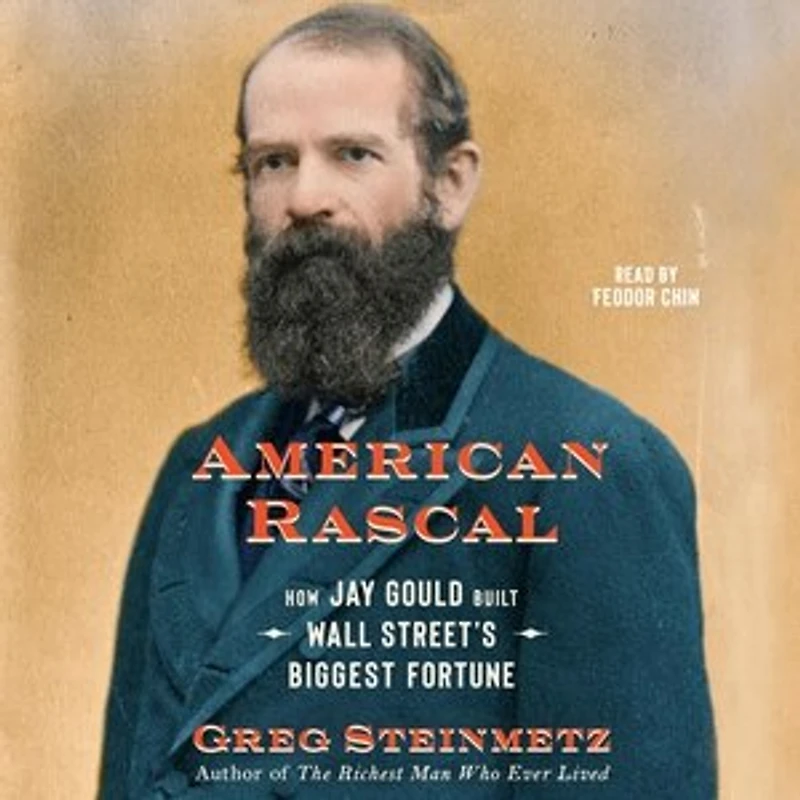
American Rascal: How Jay Gould Built Wall Street's Biggest Fortune in Vernon, BC
By None
Current price: $51.95
Coles
American Rascal: How Jay Gould Built Wall Street's Biggest Fortune in Vernon, BC
By None
Current price: $51.95
Loading Inventory...
Size: Audiobook
*Product information may vary - to confirm product availability, pricing, shipping and return information please contact Coles
The gripping biography of Jay Gould, the greatest 19th-century robber barons, whose brilliance, greed, and bare-knuckled tactics made him richer than Rockefeller and led Wall Street to institute its first financial reforms. Had Jay Gould put his name on a university or concert hall, he would undoubtedly have been a household name today. The son of a poor farmer whose early life was marked by tragedy, Gould saw money as the means to give his family a better life…even if, to do so, he had to pull a fast one on everyone else. After entering Wall Street at the age of twenty-four, he quickly became notorious when he paralyzed the economy and nearly toppled President Ulysses S. Grant in the Black Friday market collapse of 1869 in an attempt to corner the market on gold—an event that remains among the darkest days in Wall Street history. Through clever financial maneuvers, he gained control over one of every six miles of the country’s rapidly expanding network for railroad tracks—coming close to creating the first truly transcontinental railroad and making himself one of the richest men in America. American Rascal shows Gould’s complex, quirky character. He was at once praised for his brilliance by Rockefeller and Vanderbilt and condemned for forever destroying American business values by Mark Twain. He lived a colorful life, trading jokes with Thomas Edison, figuring Thomas Nast’s best sketches, paying Boss Tweed’s bail, and commuting to work in a 200-foot yacht. Gould thrived in an expanding, industrial economy in which authorities tolerated inside trading and stock price manipulation because they believed regulation would stifle progress. But by taking these practices to new levels, Gould showed how unbridled capitalism was, in fact, dangerous for the American economy. This eye-opening history explores Gould’s audacious exploitation of economic freedom triggered the first public demands for financial reform—a call that still resonates today.
The gripping biography of Jay Gould, the greatest 19th-century robber barons, whose brilliance, greed, and bare-knuckled tactics made him richer than Rockefeller and led Wall Street to institute its first financial reforms. Had Jay Gould put his name on a university or concert hall, he would undoubtedly have been a household name today. The son of a poor farmer whose early life was marked by tragedy, Gould saw money as the means to give his family a better life…even if, to do so, he had to pull a fast one on everyone else. After entering Wall Street at the age of twenty-four, he quickly became notorious when he paralyzed the economy and nearly toppled President Ulysses S. Grant in the Black Friday market collapse of 1869 in an attempt to corner the market on gold—an event that remains among the darkest days in Wall Street history. Through clever financial maneuvers, he gained control over one of every six miles of the country’s rapidly expanding network for railroad tracks—coming close to creating the first truly transcontinental railroad and making himself one of the richest men in America. American Rascal shows Gould’s complex, quirky character. He was at once praised for his brilliance by Rockefeller and Vanderbilt and condemned for forever destroying American business values by Mark Twain. He lived a colorful life, trading jokes with Thomas Edison, figuring Thomas Nast’s best sketches, paying Boss Tweed’s bail, and commuting to work in a 200-foot yacht. Gould thrived in an expanding, industrial economy in which authorities tolerated inside trading and stock price manipulation because they believed regulation would stifle progress. But by taking these practices to new levels, Gould showed how unbridled capitalism was, in fact, dangerous for the American economy. This eye-opening history explores Gould’s audacious exploitation of economic freedom triggered the first public demands for financial reform—a call that still resonates today.








More About Coles at Village Green Shopping Centre
Find everything in-store including new, used and children’s books, music, movies, games and toys. Visit Coles today to find the perfect gift, or a novel for yourself. COVID-19 UPDATE: Open | Regular Centre Hours
Store Info
Find Coles at Village Green Shopping Centre in Vernon, BC
Visit Coles at Village Green Shopping Centre in Vernon, BC