

Choice Made Simple!
Too many options?Click below to purchase an online gift card that can be used at participating retailers in Village Green Shopping Centre and continue your shopping IN CENTRE!Purchase HereHome
Agent-based Macroeconomics: The Schumpeter Meeting Keynes Models
Coles
Loading Inventory...
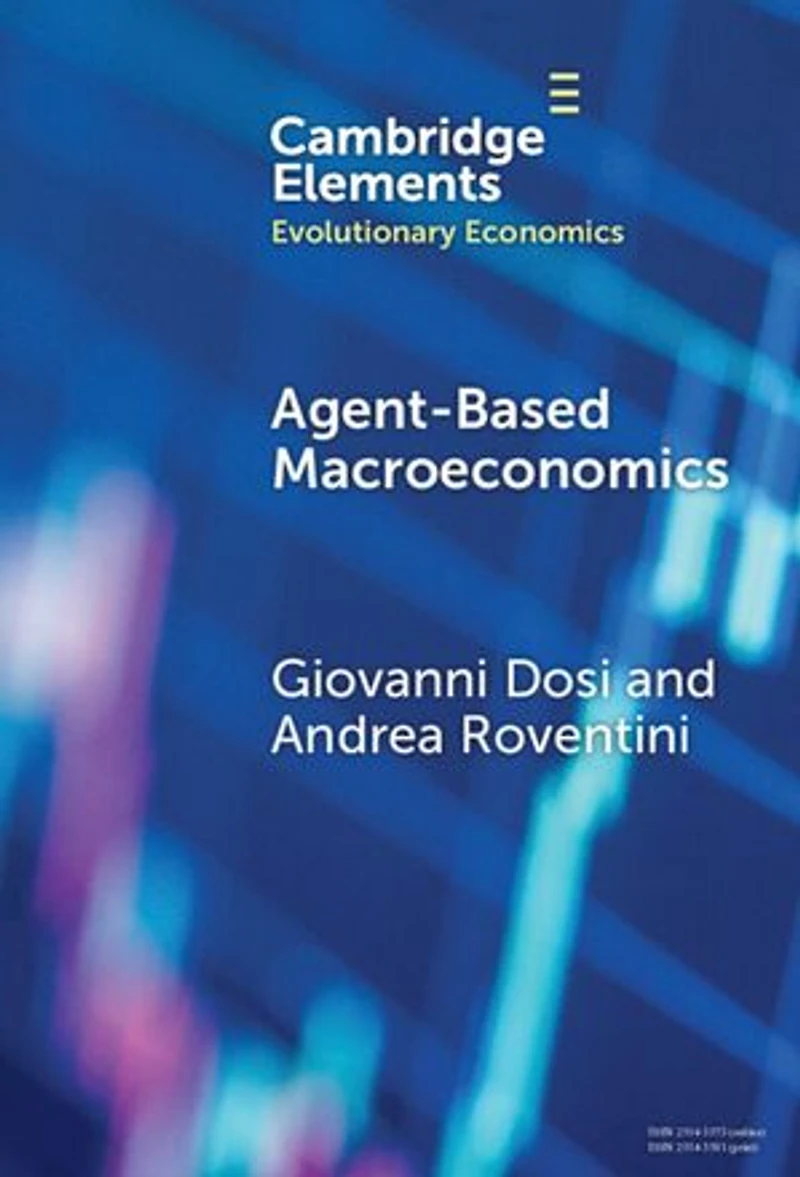
Agent-based Macroeconomics: The Schumpeter Meeting Keynes Models in Vernon, BC
By None
Current price: $23.19
Original price: $28.95
Coles
Agent-based Macroeconomics: The Schumpeter Meeting Keynes Models in Vernon, BC
By None
Current price: $23.19
Original price: $28.95
Loading Inventory...
Size: Kobo eBook
*Product information may vary - to confirm product availability, pricing, shipping and return information please contact Coles
This Element is about agent-based macroeconomics in general, and in particular about a family of evolutionary, agent-based models (ABMs), which are called 'Schumpeter meeting Keynes' (or K+S). The K+S models knit together 'Schumpeterian' endogenous processes of innovation with 'Keynesian' mechanisms of demand generation. As with all well-constructed ABMs, the K+S models are populated by a multiplicity of agents which interact on the grounds of quite simple, empirically based, behavioural rules, whose collective outcomes are 'emergent properties' which cannot be imputed to the intention of any single agent. After the K+S model is empirically validated, the impacts of different combinations of innovation, industrial, fiscal, and monetary policies for different labour-market regimes and inequality scenarios are assessed. The Element offers a new perspective on macroeconomics considering the economy as a complex evolving system.
This Element is about agent-based macroeconomics in general, and in particular about a family of evolutionary, agent-based models (ABMs), which are called 'Schumpeter meeting Keynes' (or K+S). The K+S models knit together 'Schumpeterian' endogenous processes of innovation with 'Keynesian' mechanisms of demand generation. As with all well-constructed ABMs, the K+S models are populated by a multiplicity of agents which interact on the grounds of quite simple, empirically based, behavioural rules, whose collective outcomes are 'emergent properties' which cannot be imputed to the intention of any single agent. After the K+S model is empirically validated, the impacts of different combinations of innovation, industrial, fiscal, and monetary policies for different labour-market regimes and inequality scenarios are assessed. The Element offers a new perspective on macroeconomics considering the economy as a complex evolving system.
You May Also Like









More About Coles at Village Green Shopping Centre
Find everything in-store including new, used and children’s books, music, movies, games and toys. Visit Coles today to find the perfect gift, or a novel for yourself. COVID-19 UPDATE: Open | Regular Centre Hours
Store Info
Find Coles at Village Green Shopping Centre in Vernon, BC
Visit Coles at Village Green Shopping Centre in Vernon, BC