

Choice Made Simple!
Too many options?Click below to purchase an online gift card that can be used at participating retailers in Village Green Shopping Centre and continue your shopping IN CENTRE!Purchase HereHome
A First Course Noncommutative Rings
Coles
Loading Inventory...
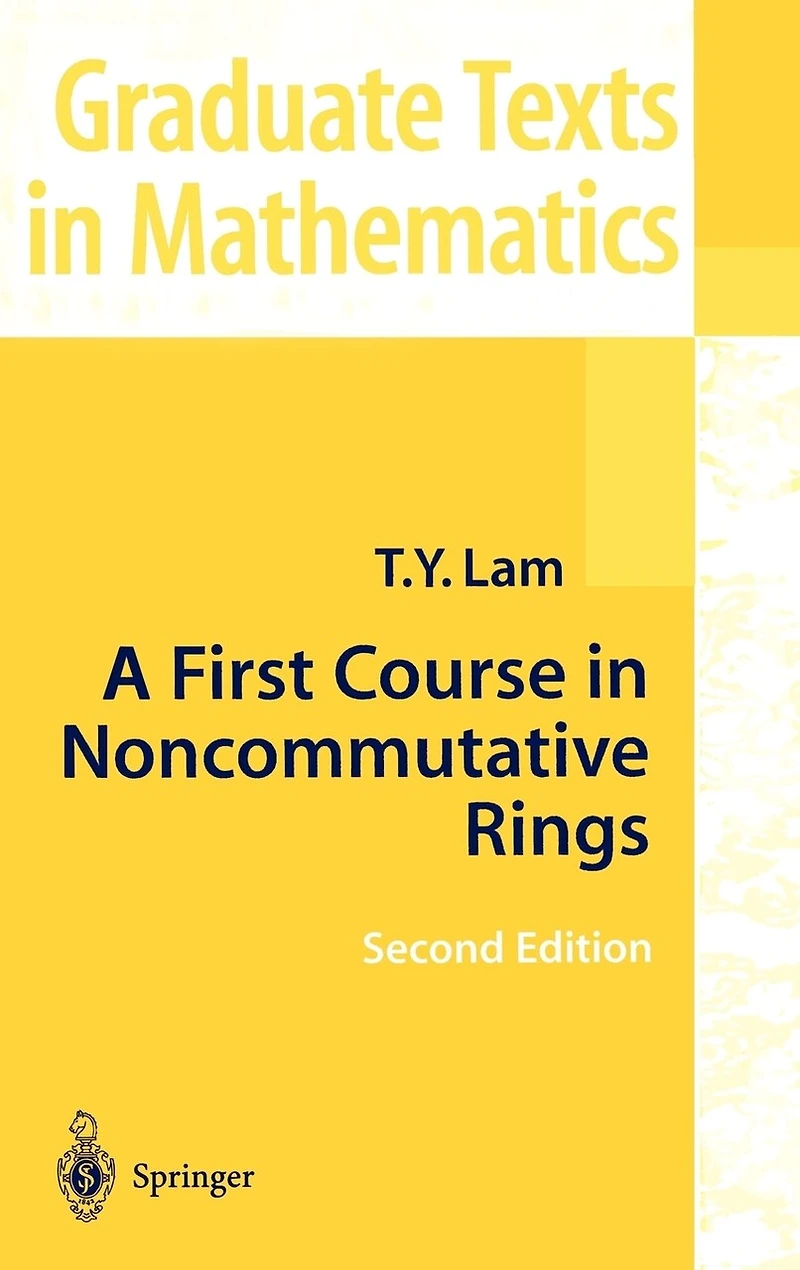
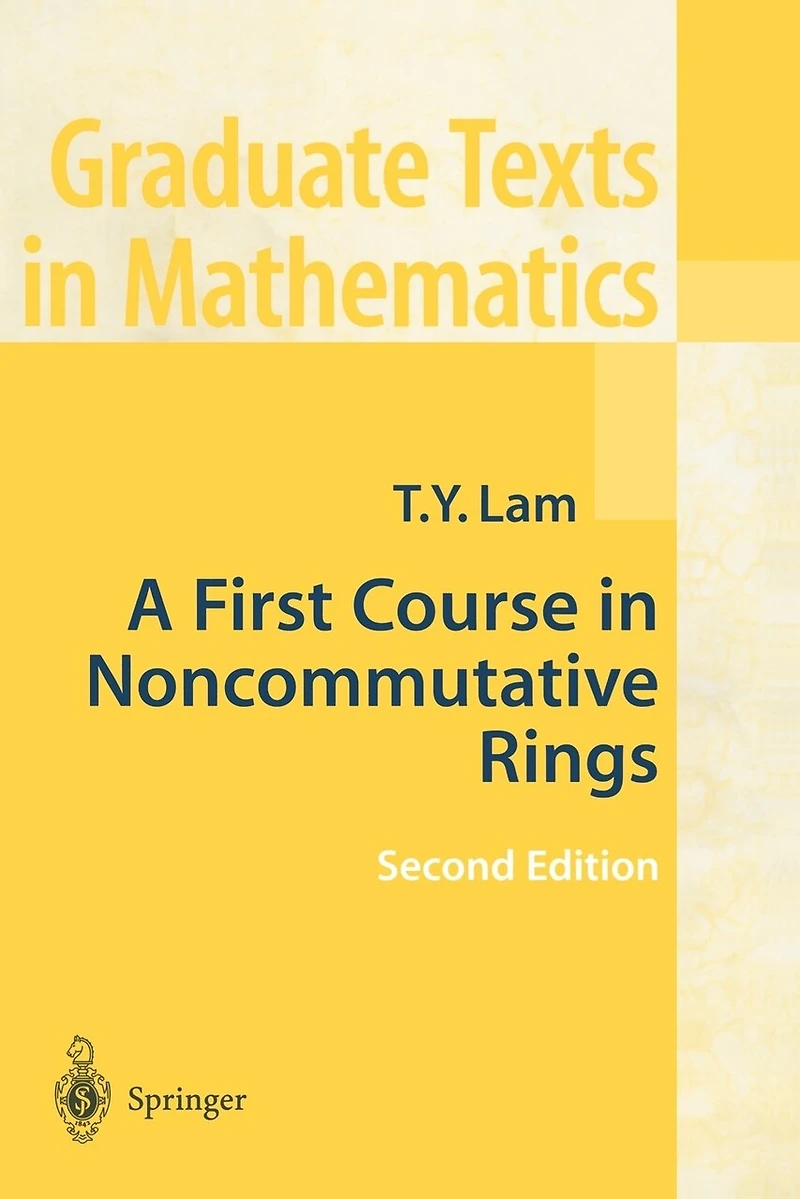
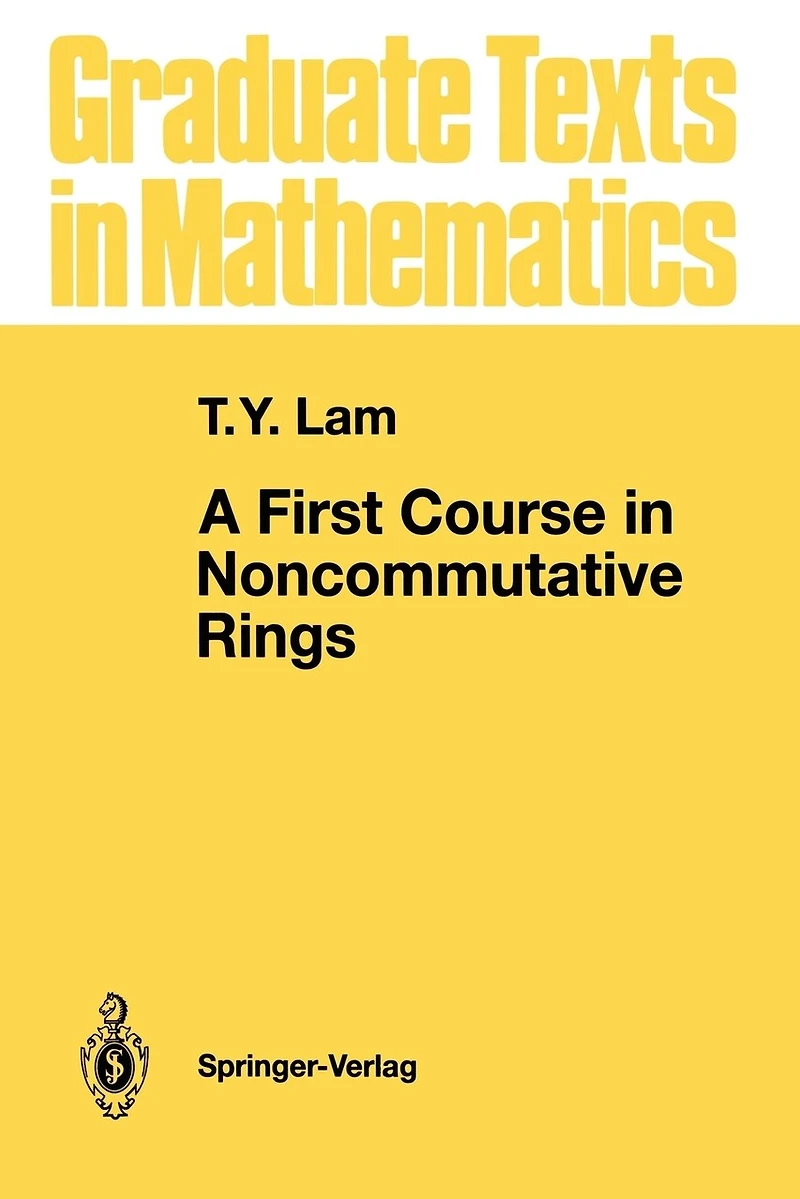
A First Course Noncommutative Rings in Vernon, BC
Current price: $114.32
Coles
A First Course Noncommutative Rings in Vernon, BC
Current price: $114.32
Loading Inventory...
Size: Hardcover
*Product information may vary - to confirm product availability, pricing, shipping and return information please contact Coles
One of my favorite graduate courses at Berkeley is Math 251, a one-semester course in ring theory offered to second-year level graduate students. I taught this course in the Fall of 1983, and more recently in the Spring of 1990, both times focusing on the theory of noncommutative rings. This book is an outgrowth of my lectures in these two courses, and is intended for use by instructors and graduate students in a similar one-semester course in basic ring theory. Ring theory is a subject of central importance in algebra. Historically, some of the major discoveries in ring theory have helped shape the course of development of modern abstract algebra. Today, ring theory is a fer- tile meeting ground for group theory (group rings), representation theory (modules), functional analysis (operator algebras), Lie theory (enveloping algebras), algebraic geometry (finitely generated algebras, differential op- erators, invariant theory), arithmetic (orders, Brauer groups), universal algebra (varieties of rings), and homological algebra (cohomology of rings, projective modules, Grothendieck and higher K-groups). In view of these basic connections between ring theory and other branches of mathemat- ics, it is perhaps no exaggeration to say that a course in ring theory is an indispensable part of the education for any fledgling algebraist. The purpose of my lectures was to give a general introduction to the theory of rings, building on what the students have learned from a stan- dard first-year graduate course in abstract algebra.
One of my favorite graduate courses at Berkeley is Math 251, a one-semester course in ring theory offered to second-year level graduate students. I taught this course in the Fall of 1983, and more recently in the Spring of 1990, both times focusing on the theory of noncommutative rings. This book is an outgrowth of my lectures in these two courses, and is intended for use by instructors and graduate students in a similar one-semester course in basic ring theory. Ring theory is a subject of central importance in algebra. Historically, some of the major discoveries in ring theory have helped shape the course of development of modern abstract algebra. Today, ring theory is a fer- tile meeting ground for group theory (group rings), representation theory (modules), functional analysis (operator algebras), Lie theory (enveloping algebras), algebraic geometry (finitely generated algebras, differential op- erators, invariant theory), arithmetic (orders, Brauer groups), universal algebra (varieties of rings), and homological algebra (cohomology of rings, projective modules, Grothendieck and higher K-groups). In view of these basic connections between ring theory and other branches of mathemat- ics, it is perhaps no exaggeration to say that a course in ring theory is an indispensable part of the education for any fledgling algebraist. The purpose of my lectures was to give a general introduction to the theory of rings, building on what the students have learned from a stan- dard first-year graduate course in abstract algebra.
You May Also Like







More About Coles at Village Green Shopping Centre
Find everything in-store including new, used and children’s books, music, movies, games and toys. Visit Coles today to find the perfect gift, or a novel for yourself. COVID-19 UPDATE: Open | Regular Centre Hours
Store Info
Find Coles at Village Green Shopping Centre in Vernon, BC
Visit Coles at Village Green Shopping Centre in Vernon, BC